Monday, December 21, 2009

Acceptance. Tolerance. Flexibility. Patience.

I came to Ghana with these four words in mind. I’ve repeated them like a chant since. As I said earlier my goals are two fold, for others and for myself. As my time here dwindles I find myself thinking: ‘What have I truly gained from this experience?’ However, each time I come to the same conclusion: I won’t truly know until I leave here.

When I think of the four words I think I can say that each has increased, some more than others.

I think of the sick 4 month old we saw in October. I pleaded the family to go immediately to the hospital one hour away. One week later we found out they never went. We, as a team, visited the family at home three times over the last month. I thought about taking medicines to the home and giving it to the family. But I decided otherwise. Dr. Rettig’s words echo: “These families know their child is sick. If they wanted to they would have come in earlier, but they chose not to. There are so many sick children and limited resources, we must focus our resources on those with the families invested in caring for them.” I have accepted my limitations in helping this child. Everyday I pass by the mother’s food stall and greet her. I can only hope she brings her child to the clinic, but there is nothing I can do by force.


I also accepted that I am “fat” here and that, may actually be a compliment. Within my first week of arriving an older woman slapped me on the ass and said: “I like you. You are fat. I consider you to be like my youngest daughter.” I still don’t understand how to put those three sentences together, but I like to think they mean something positive.

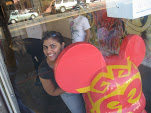
“Obruni coco mache” (white red person) is yelled, no, sung by children near and far everytime I pass through the village to go somewhere. I have become tolerant of my label and that I in someone else’s eyes am seen as “the white person.” On most days I not only tolerate but welcome 7 children yelling in chorus “obruni coco mache,”
“Obruni. Obruni. Obruni. Obruni. How are you?,”
“Obruni coco. Obruniobruniobruniobruni Where are you going?”
I think of myself as the Miley Sirus or Mickey Mouse of Buamadumase. I too would be excited every time Micky Mouse walked through my neighborhood if I was four years old.

I am sure that I have become flexible figuratively and literally, as I have been doing yoga a couple times a week. But I certainly am not as bendy as I used to be (again figuratively and literally). Somethings feel like they are pushing my limits until that thing is taken away or, in some cases, added on. The water tank seemed far away until the rainy season ended and now I have to go further away to the pump to fetch my water. I miss the tank full of water. On the other hand, I thought sitting four in the back seat and three in the front of a taxi was a lot. But the other day, while we were waiting for the taxi to fill up, I heard the “baa” of a sheep. Sheep are as common as people in the village, but this one seemed awfully close. I looked, but to no avail could I find her. Finally the car filled and we rolled out, the “baa” followed us. Alas, I realized she was with us all along…sitting in the trunk.

As for patience, I have two words: slow internet.

Monday, November 30, 2009

Rising and Setting With the Sun


Off the Accra to Kumasi road begins a paved road towards Boumadumasi. The pavement is deceiving; for once you reach the top of the first bend a dirt road awaits you. The taxi ride with four people in the back seat always gives my insides a good shaking as we hit the potholes and water puddles on our ride to Bouma. In fact, my body has begun to resist, opting rather to take the two-mile walk on foot. The walk is a peaceful one: Plantain trees and corn crop tower far above me, occasionally making way for the scenic landscape in the distance.

Walking into town at 7am makes me feel late and lazy. Children skip energetically in their bright yellow uniforms. Storeowners sweep vigorously, sending the dust back to the road it came from. Vats of water are carried atop heads to their respective homes, vegetables are neatly arranged into piles for selling and oil is heated to start frying yams. If I didn’t know better I would think it was the middle of the day.

I am now more synchronized with the village; I rise and set with the sun. In a place where electricity comes and goes at its leisure and water is accessible for all at a central pump, the sun is more than your friend; it is your protector, caretaker and provider. Now my eyes open at 6am and start to droop around 7pm.

As I hit the two-month mark in rural Ghana, I realize and have come to respect my own limitations. Reluctantly I admit that I am an American, raised in a comfortable environment with all amenities available at my fingertips. Never have I had to fetch the water I use to wash my body, the dishes and my clothes. For each drop fetched I sweat a couple more. A sink is so commonplace that I never once stopped to appreciate it’s worth. To think, all these years I just stacked my dirty dishes in there, spit my toothpaste out in there, rest my soap conveniently next to the handle. I can’t do that now and I miss the sink. And, of course: electricity. Thank you Benjamin Franklin if it was, in fact, you who discovered it flying a kite. To have light at night, a computer to type on, a phone to call family to has become invaluable to me. Once again, I never anticipated a life without these things.


From these reflections begs the question as to why I’ve come here. Why I have opted for a circumstance so extremely different, no difficult, compared to mine. My thoughts are two fold: one for myself and one for others.

I don’t care what explanation someone gives for volunteering, there is always a selfish component. It is there so I think it is worth acknowledging. In this case my selfish gains are perspective on the world greater than myself and appreciation for so much I take for granted in day-to-day life. Beyond these things, is hearty nourishment for my soul from being surrounded by such enriching company. In simplicity lies truth, there isn’t enough “stuff” to hide behind or distract one’s self with. You see real people, talk a real talk and are forced to acknowledge and accept the environment around you. I do spend time with the stray cat, countless chickens and corn crop everyday…brushing my teeth.

The second part is for the work. The education we go through to become a doctor compared to how we are utilized (at least as Pediatrician’s in the US) are so incongruent. It is hard to justify that giving someone cough syrup or convincing a parent a child doesn’t need antibiotics is the richest career I can have. Coming to rural Ghana has reignited this drive to figure out exactly how a snake bite is treated or what not to miss when treating Malaria. Additionally it pushes me to expand my medical knowledge for a greater purpose: education, education, education. Educating communities on having healthier children, on decreasing Malaria and controlling their hypertension seems to have a much larger and satisfying impact than treating sniffles (unless, of course it is Syphillis…I’m a nerd, I know). Not to mention that the clinic closes at 3pm (a perfect working day finish time).

As the three remaining hours of sunlight last, we wrap up our daily duties. Knowing I have no where to go, no one to report to or any TV shows to watch, I accept my current reality and prepare to shut down not too long after the sun sets.

Thursday, November 12, 2009

Tro Tro Queen


Flies and I have become friends. We shit in the outhouse then walk to clinic together every morning. Initially their incessant buzzing in my ear had me waving my hands around like a mad woman. But their persistence wore me thin and I have just come to accept them as a constant companion on certain pathways and in certain parts of the home.

Tro-tros and I have also become good friends. Tro-tros are the (at least my) staple form of transport between towns in central Ghana. They are mini-vans that putt down the main road from Accra to Kumasi picking up and dropping off passengers en route.

“Kumasi. Kumasi. Kumasi. Kumasi. Kumasi. Kumasi.” You’ll hear the mate hang out the van door and shout. It is just impossible to miss your ride.

My favorite part: the price is just right. Average cost: 70 pesawas = $0.50. You don’t need to know me well to understand how happy that makes me. But I have other favorite parts. The mate is always a point of intrigue. Much like the way you stare at your teacher’s shoes, blouse and twitches in her face while watching her all day long, I watch the mate.

Each tro-tro has a driver and a mate to accompany him. The mate does the shouting, seating and collecting money. The driver and the mate are a dynamic duo: young men spinning their wheels, cruising the main road and making a dime in the process. They communicate without ever talking. A bang on the side of the door means stop, another bang means go.

The tro-tro extends beyond the mate and driver though. Each country and culture has its idiosyncrasies , this is one of them. Everyone moves with a quiet understanding and this system that looks haphazard and crowded actually is hardly at all. A good 12-14 of us pile into the car, you fill the back most seat first. Time to time we stop at some random roadside, from a little corner emerges a town you may have passed by a hundred times and never noticed. Someone in the back second road will deboard. Then we all will reshuffle ourselves to fill the empty spot and leave room up front for the next passenger.

Everyone on board works on the honor system. You just pay the mate and he never bugs you again. When in the back row, you just tap the passenger in front of you on the shoulder and they pass your money up to the mate and your change passes back down the same chain of people. There really is very little haggling or doubt in the whole process.

When stepping on board the passenger next to you often greats you: “Ete Sen?” (how are you) or a “Good Afternoon” in the crisp Ghanian English accent.

Bring your suitcase, bring your wood, bring your chickens, it is all welcome on board here.

Another idiosyncrony I have come to appreciate and admire really is the efficient use of the head. It is essentially a third hand that I never knew about, but somehow every Ghanian does. When I traveled to India in the past I would, time to time, see a woman carry a ceramic dish on her head. But in Ghana it is a different story all together. You name it, it can be carried on your head. A plastic bag with groceries, a couple books, a suitcase, a board holding sunglasses ready to sell, a bucket holding 20 buckets ready to sell, a sewing machine, a crate of chickens! Now if a few did that, then I would, like with a magician, be convinced that it is a talent that only a few are skilled enough or committed enough to accomplish. However, when I see 4 year olds to 94 year olds all doing the same task, turning their head to talk to each other, grabbing their baby to pick them up, reaching down to scratch their leg without flinching or hesitating about the stuff on their head, I wonder why the rest of us missed the boat on this.

So the other day it started to rain, I used that as my justification to walk around Kumasi with a bag on my head. At first I held it hesitantly on my head, using my right hand as my training wheel and eventually I was hands free. ‘Try and look normal Mona,’ I told myself. I am sure I looked like the Obruni (Gringo) trying to be an African. But now, more importantly, I can say I did it.

At the risk of making a overgeneralization, I feel like the tro-tro and head carrying system exemplify something I have noted in Ghana: a lot of common sense and efficiency. I have only been here going on one month now, so there is still a lot more to learn. But I don’t find myself fighting battles to do little things or having to talk to six different people to get a straight answer. Above all, I really feel a lot of genuine intrigue in who I am and concern for my safety. There is a certain level of peace I am able to obtain here that I was lacking back home. Escapism? Life minus LA traffic? Preoccupation with sweeping and washing and fetching water? Who knows, but all I can say is that I am enjoying my time out here.

Friday, October 30, 2009

Martha

The complaint that brings a patient in often masks something more serious. That was the case with Martha. Martha is a beautiful Ghanian woman. She bears the leather lifelines of 60 years of relentless farming, though they somehow decorate her face nicely. Her dress bestows the essence of Ghanian wear: a headwrap is neatly packaged on top of her head with an ornately, brightly patterned blouse and full-length skirt to match. Underneath this demeanor shines the spirit of a survivor; you see it in her eyes.

Today she comes in complaining of falling twice in the last week. It is hard to imagine a woman with a lifetime practice of balancing her merchandise on her head and walking two miles to simply trip. In fact, that is hardly her case. She describes herself as having “weak knees.” But when you look closer you see a cloudy haze covering those expressive eyes. Like many her age in Central Ghana, she is beginning to have cataracts. Upon asking we find out that she can barely see me sitting right in front of her. For the first time in her life she learns that she is hypertensive with her BP at 160/100. Arthritis, cataracts and hypertension are extremely common problems that plague our elderly, farming population in Ghana. There was no brilliance necessary in realizing that arthritis from 70 years of wear and tear on her knee joint along with her developing cataracts leaves her at risk for one mighty fall and a hip fracture to follow suit.

As horrendous as hip fractures in the elderly in the US may be, we rely on hip replacement surgery, well-trained anesthesiologist to handle the complications of elder age and months of physiotherapy to nurse them back to baseline. If Martha has a fracture, she, with her uncontrolled hypertension, maybe able to get surgery, but she will no longer have an income and become reliant on someone to care for her through months of recovery, hence losing a second income.

This foresight has the head nurse, MaVic, and myself worried for her. We prod her to please, please go to Agogo Hospital’s eye clinic. After all, she has free health insurance from the government (provided for the elderly). Her eyelids sag under the weight of her problems. She can’t afford to miss a day of work, nor can she afford the fare to Agogo Hospital: $ 0.75. The more we tell her go, the heavier her eyes get. She looks away, shortly after she checks out of the conversation.

We play out all the potentially dangerous prospects that lay in her immediate future. “What will you do when you can’t see?” We ask.
“Then I’ll just die,” she says.

Ok, that was not the direction I was hoping the conversation to go. Martha’s eyes are calling for help. But how much hope can you ask a person who has spent a lifetime fighting to put food in her mouth; who has spent a lifetime farming and selling vegetables at the expense of her body?

We find out that she has a daughter who lives nearby. She too will have to take a day off work, she too doesn’t have fare for transportation, but she can take her. Now her eyes dance with uncertainty and a tinge of despair. In this aspect, Martha was more of a guilty mother than anything else; an older mother who strives to be independent of relying on her children. She really doesn’t want to ask for help. Personally, I hate asking for help. So, perhaps only on this level, I understand her angst. However, Martha, MaVic and I talk through it. Martha agrees to ask her.

Certain things in life cross all boundaries; they hit at the core in the most fundamental of human ways. Despair is universal, it is a feeling we all recognize. It is an uncontrollable situation; loss of control. My heart sunk under the weight of her increasingly cloudy eyes. I do not understand why God would bring her into this world under these circumstances and I under my “American” circumstance. Even under these circumstances she came bearing vegetables for the clinic. “Why is it the people with the least amount always want to offer whatever they have and those who have more hold on tighter?” asked MaVic.

There is so much I don’t understand, but this I do: life is much greater than myself and the visible world around me. I am grateful, if only for a brief period in time, to bear witness to that.

Tuesday, October 20, 2009

Looking Beyond the Surface

Half Way There Still is Not Enough.
October, 18, 2009

Sitting down to see patients in whatever community it may be, grants an unparalleled privilege. For this week I have gained access to the inner workings of the villages buried off the main road from Accra to Kumasi in Ghana. One can only see and know so much in week, I cannot claim to know anything more than that.

A few simple reflections: People are the same wherever you go, it is there expectations that change. It seems that poverty in Ghana, Mexico, India and US alike lowers one’s expectations, inversely increasing gratitude to the care received. The gratitude here is immense, for that I am grateful. However, the poverty, limited access, limited resources and lack of education have proven to be far more challenging than the illnesses I see.

Within my first day I learned that Malaria is rampant. There are four different types, we learned in medical school. Falcipurum is the kind you never want to have, it will break down your blood and penetrate your brain. That is the one they have here. My first patient: vomiting and fever. Diagnosis: Malaria. My second patient cough and fever. Diagnosis: Malaria. My third patient: headache and fever. Diagnosis: Malaria. You get the picture.

We sat down with the community health educators this week and learned about the non-scientific science behind the persistent, rampant spread of malaria. For it is not the parasite itself that is as pervasive as the lack of education. “The government provides mosquito nets and mosquito repellent at a small cost. Most of the families have them.” MaVic (the head nurse here) informed me. “They all sit around there homes unused.” I was caught by surprise and it really didn’t make sense at first glance…until we spoke to the community workers:

“Some don’t know how to put it up,” one man said.
“They don’t know what time of day to use it,” a woman added.
“A lot of the nets are old and have holes in them,” a third voice piped up.
“When our kids sit inside the net, they want us to sit with them, but we have to cook dinner. Then what do we do?” a man inquired.
Okay now we’re getting somewhere.

Like the available access to mosquito nets, I was surprised and impressed to learn that the government provides insurance for everyone at low cost. Ah ha, Ghana accomplished in 1989 what we resist, scream and bark about in the US today...
-------------------------------------------------------------------------------------------------
A 24 year old came into see us early this week.
“My stomach and chest hurts,” he explained in Twi. Hawa, one of the nurse’s assistants, translated for me.
So we run the gamut of chest pain, abdominal pain questions English to Twi; Twi to English. This chap sounds very anxious I think and explain to him.
“…and I have pus coming from my penis.” He adds.
Okay. I don’t have computer screen with seven red blinking patients waiting for me in rooms. I can take my time. I take a deep breath. We run the gamut of sexual activity questions.
“I would like to treat him for UTI, Chlamydia and Gonorrhea,” I explain.
“Doctor, we have Doxycylcine and Ciprofloxacin.” Hawa explains.
“Great. What about Ceftriaxone to treat the Gonorrhea?” I ask.
“That we don’t have. He will have to get it from the pharmacy.” Hawa says.
“Ok, will his insurance cover it?” I ask.
“He doesn’t have any.” Hawa informs.

I take a step back. We have a government that insures, mostly subsidized and still we have uninsured patients? The 24 year old male is not the only one. There are many that follow after him. I am once again scratching my head. So I ask the nurse’s assistants to explain:
“They can only go on Fridays after they get paid from the Friday Market.” Says Hawa.
“Even then, they have to take an unpaid day off work and pay for transport to Ejisu (the town thirty minutes away). When they get there they don’t know what to do.” Jan adds.

Our chap came back with the ceftriaxone so we could give the injection. I asked to check him for HIV more out of habit than anything: “where one STD lurks often do many,” we were always taught in Adolescent Fellowship.

“Doctor, his test came back positive. I checked it twice.” Kingsley, the “labman” informed.
My heart sank, as did MaVics. We brought him in to talk to him. MaVic did the talking in Twi. “I have asked him why he is so worried,” MaVic informed. “He says that he completed secondary school, but has no money to go to college or learn a proper trade. His family cannot provide the support he needs.” She said.

She went on to tell him the results of his test. I sat and watched, not understanding what was said. I watched this young 24 year-old man engage in MaVic’s discussion, then I saw him breath rapidly, then I saw him disengage. “He is asking for water. Please fetch him some water.” MaVic Asked.
Our, already, anxious young man’s world just darkened. All we could do was inform him of it, refer him and hope he goes.

I am grateful for MaVic as the her name (Mama Victoria), the position she holds in this clinic and the presence she commands creates the ethereal community Mother many of the patients need. She will be the mother that the 24 year old chap needs right now as we continue to follow him.

I asked MaVic about the stigma attached to HIV in this community.
She informed me that it has improved tremendously with the onset of better and cheaper treatment (much due to Clinton’s Global Initiative). “The men no longer immediately divorce their wives or wives divorce their husbands as they once did,” MaVic informed. “They know that they can still go on to have a full life.”

The cases are so many, every patient that walks in has so much to teach me. This week I go to a nearby town, Agogo, to follow and learn about local disease and treatment in Agogo Hospital. The best part about it: internet access baby!

Saturday, October 10, 2009

Landing on Two Feet In Ghana

Once in a rare while has life presented a moment where I step back and think, “Wow! This is happening to me.” Two days ago I felt that.

I departed Accra (the capital of Ghana) by bus en route to Huttel Clinic. I was told that if I follow the map to the nearby town, Duampompo, it will get me within a 5 minute taxi drive of the clinic. It wasn’t on the map.

Rest assured the bus driver guaranteed he would drop me off there. Who am I to doubt him? I said a long hard prayer to God that morning with a little reminder, “I am in your hands today.”

My bus was quite cozy. I got a seat by the window with the seat next to me open for my excessive things to unravel and breathe for a minute. It was not long before I saw the bus piling up at our next stop. My things reluctantly resumed their condensed positions back in my backpack; my backpack reluctantly resumed its position on my lap. Low and behold, just the largest lady took that open seat next to me. Not only was my spare seat gone, but part of my own seat as well.

“Patience. Flexiblity. Openess. Acceptance.” I repeated to myself.

“Good afternoon,” she told me.

I concurred.

We exchanged a few kind words. I was quick to disclose my journey to this remote location off the typical Accra to Kumasi route.

“You are new here? Welcome to my country!” she proclaimed.

What a sweet woman! She could share as much of my space as she liked. At points our bodies nuzzled into each other; one nudging elbow permissive and relaxing towards the other. I had to, in fact, hold back from leaning on her shoulder and nodding off.
I asked her if she spoke Twi. “Yes, of course!”

She did not hesitate to start teaching me Twi. “Go on, say Medasi (thank you) to the driver when you get off,” she said.

We were 4 hours into the bus drive and I was just finding my comfort zone when the bus halted. I looked around for any identifiers: No city. No town. Just farmland.

I looked up. The driver was looking at me. “This is you,” he said.

I hesitated to depart from my new best friend. I looked at her longingly. “Remember to say Medasi!” she smiled and chuckled.

The driver unloaded my embarrassing, ginormous pile of bags on to the dirt road. Around me gathered three women. They were clucking in Twi and I was staring at them with my eyes crossed and probably the dumbest smile across my face.

So I was dropped in the middle of rural Africa. I stood there thinking: ‘Wow, this is actually happening to me.’ There was only one thing left to say: “Medasi.” Smile. “Medasi.”

One of these kind women read my mind and fetched me a taxi. I, being MonaVarsh and being a Puri, found myself negotiating a cab fair with no leverage, 4 bags, no clue as to where I was nor how far I needed to go. I quickly realized- his price was the right price. We drove about 32 seconds before we pulled to the side and four men piled into the back seat. With a Twi vocabulary of one word, I hugged my backpack tight and sent God a reminder “Medasi for looking out for me today?” Two miles down a bumpy, dirt road we pulled into a pink clinic.

I would be lying if I didn’t say there was an element of shock to what I had enlisted myself for. The clinic is small and basic compared to the luxuries we take for granted at home. However, the love and intent with which it was built was apparent on first glance.

My room is in humble conditions though it has shaped up quite nicely. I will take bucket baths, use an outhouse style toilet and wash my clothes myself. What actually pulled me out of my state of shock are the people with which I live. I look around and see my neighbor, Jan. Not only did she quietly, but dutifully arrange my room and bed for me when I arrived, she cooks and shares her food with me on a daily basis. Jan wakes up daily, preps herself very respectfully and is timely for work. Every time I pass her room I notice that it is maintained in a very tidy fashion. Her sandals are religiously removed prior to stepping into her room. Why, if Jan can live in these standards comfortably, should not I? Especially when realizing that the standards of the clinic rooms are significantly better than the poorer surrounding villagers.

Today I busted out the old school India squat and broom and swept my place clean. I squatted and, probably rather inefficiently, washed our dishes. Before I could huff or puff to myself I looked up to see Jan carrying a bucket of water retrieved from the well on her head for us (she did this three times by the way)!

It is strange how perspective changes so quickly. But my room is cozy now. It is dust free now. It is mosquito, cockroach and bug free! I have my host of books (including a Cecil’s and Nelson’s), a comfy little couch to lay on, space to yoga it up and, of course, Jan as my neighbor.

Jan is one of the four nurses assistants who work at the clinic along with MaVic, the very gracious nurse in charge. I will be speaking Twi before I leave primarily because they won’t be speaking to me if I don’t. These five ladies are just wonderful. They greeted me and continue to receive me with open hearts, generosity and authenticity. They only make me reflect on the kind of world I have been living in that I expect the opposite. A world devoid of contempt, animosity and competition has a calming effect on the soul. Granted I am three days in, we’ll see what 6 weeks down the road has in store for me…

Next up patients, population and providing care in limited resources.

Tuesday, October 6, 2009

Why Africa?

I had a chance to eat that final delicious Indian meal with the family (in Fremont, of course), prior to taking off. "Why are you going to Africa?" my 16 year old cousin asked. 
        "To save the starving children," I responded. Just kidding. So on my 24 hour journey, I have been simmering over how I landed up en route to Ghana for 3.5 months.
My first trip to Gujarat, India wet my travel palate. I realized how much I would like to do, how limited my capacity as a premed student was and how tranquil a life away from the bustle of everyday life in the US could be. 
I saw the opening for potential travel, unpaid, abroad this year. Afterall, I am not locked into a relationship and do not have children...so seize the opportunity. Monisha is my primary motivator to travel to an African nation: "You can come to India anytime," she said, "but when are you going to have the time and energy to see Africa for an extended period of time." 
She (as always :) was right. Little did I know that my younger brother, Munish, would beat me to it and make it out to South Africa this summer. "What is with Africa? Why is everyone going to Africa?" my mom remarked.
She wasn't incorrect, as my brother's girlfriend, Andrea had been out here the summer previous to him. How grateful I am for that as she has made my transition into Ghana a very smooth one: "We have a package for you Miss Puri," I was greeted by the hotel host. 
Wow! Who travels to Ghana and has a package waiting for them?

I think I imagined myself just stepping off a plane with a stethoscope draped over my shoulder. "Thank God I am finally a doctor. For sure I will be in high demand!" I would think. As any great adventure, that statement proved to be of utter ignorance and over confidence. Finding a well structured, non-religious, medical project in an African country proved much harder than initially anticipated. 
However, I am grateful to have landed with Foundation Human Nature . This organization funds and runs two clinics: one in Ecuador and one in rural Ghana. They picked up this clinic, as it was not being efficiently run before, about 5 years back. They have since educated and trained a lot of the full time staff and created a solid structure to provide health care and education to the surrounding 8000 villagers in the Ashante region of Ghana (about 5 hours north of Accra, the capital). 
I have yet to arrive, but I came prepared to sit, to listen, to observe prior to working (much easier said than done for me). I have come prepared to study those foreign diseases we just don't see in the US. Lastly I have come prepared to occupy my time without the benefit of the TV, friends to go out with on a whim and, my greatest addiction, the internet!
I hope to see and learn interesting things and keep you posted as I go every couple of weeks. I so appreciate you reading my blog as it is so meaningful to make this connection with so many out there!
       To great adventures, new experiences and meeting new people! Mona-Varsh

Tuesday, September 15, 2009

“We did not come here to fear the future, but to shape it.” –B. Obama (Part 2)

Obama’s Speech on September 9, 2009 was dense, logical and ambitious. There are things that readily clicked, parts I had to rewind Tivo and playback to thoroughly digest, and parts that seemed lofty without practical details to back it. However above all I credit Obama for opening one of the most feared Pandora’s Boxes: a debate on our failing Health Care system. 

            Affordable Choices: This is, in fact a capitalist move that provides greatest utilitarian good. For all of us will be protected whether we are working, unemployed and especially trying to make that anxious step to our own business. Very few can disagree with the idea of insuring everyone unless they inherently believe that health care is not a right. This is a question we should all be asking ourselves, for this fundamental belief system will guide who and why we support certain sides.

            Marketing vs. Socialism: Our present system offers benefits to very few: to the insurance companies, pharmaceutical companies and to some health-care providers yet costs for coverage are skyrocketing. I have yet to find many happy with their current health insurance. As for the men at the coffee shop, they benefit from medicare. Medicare is our society’s way of taking care of our elder. This was a system that, prior to being legalized, was met with great resistance, including threats of socialism. Nonetheless, we are still not providing enough and many of our seniors cannot afford their medications.

            We all bear the brunt of  the counter-logic in our system: if we get sick and lean on our insurers to help us, we are more likely going to be dropped by them. When we change jobs, become unemployed or move we will not be picked back up because of our “pre-existing conditions.” This may be one of our greatest problems. Outlawing this will protect our citizens, something long over due. The method of executing it, however, has yet to be seen. 

One option he discusses is to provide “emergency coverage” for those who are waiting for our new system to kick in. This was a concept proposed by Mr. McCain. It is a low cost coverage to protect against “financial ruin” if one becomes seriously ill. This concept does not define “preexisting”…is that acne, blood pressure, anxiety disorder? Additionally it sounds like we have to wait for the disaster hit before we get assistance. This is hardly protective if you ask me.

Despoiling the Children: It is time to get everyone coverage, for in the end we will all bear less of a toll on our health care system simply because everyone will be healthier (right now we are ranked 37 in the world in health care systems, yet we are ranked 1 in highest cost). Additionally, they will all be assigned a proper provider rather than 1. Waiting until the problem is severe, more detrimental to them, requires less days of not functioning in society (be it work or otherwise) and calls for more expensive treatments 2. Seeking care from the inappropriate sources (i.e. going to the ER for pap smears).

We must also realize that it is not possible to give everyone what they want all the time. Often I listen to complaints of “socialized medicine” and realize that many are complaining about their full access to all imaging studies, blood tests and specialist all the time. It just is being over used and services need to be more directed.

            Public Option: I had a great time going to Santa Monica’s Third Street Promenade. Parking can be a hassle, but I am virtually guaranteed available parking with first 2 hours free and $1/hour there after. Are we suffering with lower quality parking, are the spots restricted. They certainly are not, however we all get a spot and don’t pay the $20 prices that going to popular parts of Chicago, SF, NYC and downtown LA have. Other benefits include supporting local businesses by buying a gift and drinking a smoothie on the promenade.

            When you have a large group of consumers negotiating with pharm companies and hospitals, the negotiating power becomes stronger, stiffening the competition. Obama brought up 34 states have 5 health insurers or less in the state. That kind of monopoly is hurting the insured. Strengthening the competition will force efficiency, decreasing administrative costs (which equals 30% of our costs in the US compared to <5%>

            Funding the Cause: More people insured + Better care = Lower costs??? It’s like the ultimate magic trick and Obama is the magician. 

            Reigning in the unhealthy and checking up on the uninsured that fell off our system is going to be a major cost. We are now taking onus of all the Alzheimer’s, hypertensive, diabetic and asthmatic patients. It costs money to see them more often, to check their blood work regularly, to get them their regular eye exams and the support services they are long overdue for. We have to get a sick nation healthy. No matter how you spin it, it is expensive. Once everyone is insured and stabilized then costs will go down. That isn’t going to happen overnight. This has not been addressed.

            Obama justifies that he will not let this add one dime to the deficit and that if it does he will cut from somewhere else. This sounds unrealistic and a solution by reshuffling (Schwarzenegger style).  He says that since our system is so expensive as is, the costs will be redesignated rather than increased. None of this accounts for the baseline increase in medical care everyone is going to initially need. However, down the road this all may prove to be true.

            Regardless the focus has to be diverted from for cost care to healthier care. One of the most productive ways is to allow each provider more time with the patient. It is a simple as: more time means a better history, means less unnecessary tests, means more reassurance and a strong relationship with the patient, means less uncomprehensive care, means decreased missed pathology and less law suits.


            Not discussed: The role of pharmaceutical companies in our increased costs. Plavix is the number two seller in the world, we all have some concept of the medication because of the frequency of their ads. We like to think that we are the most research heavy nations, but we are one of the few that promotes prescription medicines like soda. There is no irony that prescription medications abuse has become a large source of addiction in this country. The markup between US and India runs about a 20x markup; the cost of our copays are often more expensive than buying the drug in another country.

            While some things work and make total sense, others need to be extensively flushed out. However, having a blueprint on the table gives us somewhere to start. Having the vibrant discussions gives us the concepts to expand upon. Having a decrease tolerance for frivolous rumors and increased tolerance for productive criticism will lead us in the right direction. 


Sunday, September 13, 2009

“We did not come here to fear the future, but to shape it.” –B. Obama(Part 1)

How much does it suck to wake your ass up at 630am, trudge out of the house and race to work in hopes of not having patients waiting? Not as much as getting there and realizing you start 12pm.

            I found my way to a coffee shop. The name of the place was “Coffee Shop.” The diner was so classic diner you would think it was a theme restaurant like Ruby’s or Johnny Rocket’s.

            Putrid pink countertops lined an all white diner decorated with “juke-box rockin” wallpaper. At the end of the counter sat a TV blaring Fox News. The last public place I saw Fox News blaring at was the Acura dealership; it says a lot about a place. Eventually they flipped to CSpan (thank Gods).

            I walked in with full intent of continuing to read “Interpreter of Maladies,” fully aware I would leave in a state of depression, despair and wonderment. But my eyes were so distracted by this alternate reality I only knew in Dublin, CA circa 1982 or from watching folks crazy angry at health care related town hall meetings. Even if I disciplined my eyes back to the page, my ears perked up to the conversation: “Oh it’s just a bunch of Democrats (talking about health care),” a man said waddling into the diner.

            It’s the day after Obama’s address about health care to Congress. Whether he’s right or wrong I praise him for spurring a great debate- from congressmen (and women) to the man in front of me at the coffee shop.

            The man found a pair of willing ears and relentlessly made his opinion known to all of us at the coffee shop, whether we liked it or not: “He’s pushing the insurance companies so tight, he’s not leaving them any room (for profit).”

            The willing ears agreed and chimed in, “Most of us have nothing wrong with our insurance anyway.”

            This came as amazement to a doctor’s ears. As the men I saw were rather tubby and aged. ‘For sure they have a pre-existing condition,’ I thought to myself.

            “What you up to today,” asked the coffee shop owner of one of the men.

            “I’m going to buy a gun set,” he said.

            I had to take a minute to double check that I was in California and then realized that I am not isolated from the images I see on TV….

Tuesday, July 28, 2009

What's the Difference Between Kaiser and France? (Part 2)


            Starting with the team I know best, the doctors. It is then hard to generalize us as a group, but for greater understanding of the physician it is needed. We went into medicine with the idea of studying science diligently, memorizing a million details about a million diseases. No where in there were we taught about insurance companies, personal finance, business management and legal pitfalls. In a jam packed med school curriculum it seems almost unethical to focus on these things, for it would detract from our greater purpose: to understand medicine in the most thorough, holistic manner. Those who learn about finance and legality of medicine get another degree, an MBA or JD.

As any doctor will agree, the world changes once stepping outside those intense, yet protective gates of medical school.  Hopping onto the professional circuitry of the medicine reveals a disturbing reality of medicine in America: it’s a business. Conferences give lecture options: “billing for sports medicine” or “emerging epidemiology of influenza.” Only one of those is going to keep you in business.

I practice medicine with one eye on diagnosis and treatment and another on signing forms, keeping my patients satisfied, write down enough information to prevent me from getting sued and allow adequate billing from insurance companies and do it all very fast.

            Which brings me to the partner in the co-dependant relationship of the medical profession: the insurance companies. Granted, in the past, the physician’s held the reigns. I can’t back it scientifically, but all you have to do is talk to my parents or any “old-time doc” and you will here: “It’s just not worth it. Medicine isn’t what it used to be.” Reigns were taken from them because of capitalizing on the medical system for their own financial gains.

As we blame the banks for not baring “financial ethics” in mind, we ask doctors to do the same. They should not overbill, do too many procedures or order too many tests just because they can. Without oversight in place, physicians didn’t prove ethically responsible. Putting in some checks and balances was more than appropriate and was attempted by Hillary Clinton in the early 1990’s.

However power transferred laterally instead of redistributing. Insurance companies were granted the power of curbing spending by mandating what labs, procedures, specialist and the like are necessary for the patient. Too many antibiotics prescribed, the physician is dinged. Too many labs ordered, the physician is dropped from that insurance panel. Not seeing enough patients, means not earning the clinic enough money to justify overhead costs, the doctor is dropped from the clinic.

Medicine not deemed necessary per insurance companies is simply not covered. After three days in the hospital insurance companies claim tuberculosis is all-better or that the patient is no longer suicidal, then no more days covered. Patients are a commodity on which to maximize profits and minimize costs.

            And so we find ourselves trapped in an abyss: a space to which the money pours in but very little makes it out. Once again, we find ourselves blaming insurance companies for not having “financial ethics” when dictating a patient’s reimbursement.

            Capitalism, arguably, provides the “healthy competition” needed for advancing health care. At Kaiser there are hypertension clinics run by pharmacists, self-referral to nutritionists and incentives for staying fit. Kaiser knows that keeping its patients healthy keeps them out of the hospital, hence keeps their bills down.

            Kaiser also maximizes its physician’s, nurse’s and ancillary staff’s capacity as to be the most financially efficient as possible. Speed & service with a smile will get you the good pay and a stable job. The focus redirects to meeting the company’s criteria, aiming to get positive survey responses from patients and seeing a lot of patients. Pay is the incentive, not care.

            For a limited time a year Kaiser will have open enrollment for our children without insurance or who are on medical. All of us will try with concerted effort to enlist them. We all recognize that it is a privilege to have all resources available to you in one system. It is for the privileged whom are accepted in.

            Another, often overseen, player is the pharmaceutical company. Medicine abroad will run people 10-50 times cheaper. The price differential extends beyond our extensive research of American companies. Money directed towards marketing and lobbying are often incomprehensible. Pharmaceutical companies spent a reported $40 million lobbying Congress in April, May & June of this year. ( http://www.npr.org/templates/story/story.php?storyId=106899074  ) Does the lay person need to see ads about Plavix, a medication prescribed to patient’s at risk for stroke? Is it appropriate for pharm reps to be constantly present in clinics to promote their product over another? Is it appropriate for physicians to spend time with pharm reps in clinic while patients are waiting?

            After looking at all these groups we see one commonality. Their services and products generate money. We in the United States have decided that the best way to take care of our health is by letting money run it. Unfortunately, it is at the expense of our health. Here lies the crux of how Kaiser differs from France: they diverge at the dollar. Kaiser will decide who is accepted. Once in you will feel the penny pinching from the patient's complaining about copay to the physician's eluding to the "golden handcuffs." 

The bottom line for socialized medicine is the health care, even if moderate, for everyone. Until that goal is redefined the conglomerate of hairy wire mesh chasing the dollar will run rampant, abandoning the citizens it’s to care for, leaving many to fend for themselves on the side line. 

Tuesday, July 14, 2009

What's the Difference Between Kaiser and France? (Part 1)


Health Care is such a conglomerate of patched together wiring; many people running on different circuits, yet seemingly in conjunction with each other. Looking at the tangled mess can be mind-boggling. I am “in” the system and still get dizzy listening to the news.

I run on the physician network. Though we may seem to be a continuous route on a single wire weaving through the ball of health care, we, in fact, have a fine splays of wiring amongst ourselves.

This is my attempt to understand the conglomerate from sitting within it, looking out. If you look closely you will see a fine red thread running with the thicker black one. That’s me. If you follow it, it will lead you to Pediatric Community Clinics in Los Angeles California.

When I stand back and span out I see, besides us: the physicians, insurance companies, government & policy makers, hospitals and pharmaceutical companies. All play a role in the complicated network that construct the health care system in America today.

First, I think it is important to understand that we are not France, we are not the Netherlands and we are not Canada. We are the good ol’ US of A. No matter what anyone says, we are going to do it our own way. Whether it makes sense or not is yet to be seen. That aside, we are not starting from a blank slate and creating a health care system, rather we are reconstructing some deeply embedded roots of some highly enmeshed wiring, reminiscent of the double VCR, DVD, cable box connections in the back of the Puri family room TV.

This much I get, in the middle of the ever-spiraling matrix sit our patients, with their heads spinning and eyes bugging out of their head. I see looks of despair, anticipation of bankruptcy heaped on top of pending uncertainties of their or their loved one’s health outcomes. If we keep our eyes on the prize, which is ultimately:

1.     1. To provide healthcare to all

2.     2. To provide good quality health care

3.     3. Not to bankrupt the system in the process

then sifting out the meat from the carnage of our current health care system becomes more feasible. 

Monday, June 1, 2009

India Railway Travel: Hours of Awkwardness and Entertainment (part 2)

Alas I made my bed, I must now lie in it. I much rather tuck myself away close to the ceiling than hear the rustling of the midnight passenger making their way to the hole and hoping not to fall in. I would be lying if I said I had a good night’s rest. But I was semi-sleeping until I heard the raucous in the seats behind me: the elder couple had awoken. The rest lay fast asleep.

The seat behind me was, once again, filled with another incoming fleet of passengers, this time it was early early morning, the sun had yet to wake up but you could hear her wrestling.  The elderly gentlemen had made himself comfortable in the incoming passenger’s seats. His old lady, found an empty inch on the bottom berth near me and sat on it as if it was the last remaining piece of seat in the world. Her chin buried deep in her palm and she gazed out in utter despair. Though I monitored the situation with great intrigue. I happily played asleep in my semi-comfortable train bed.

It wasn’t long before the conductor was called to rectify the newly embarked passenger’s frustrations.

“Listen, I need you to return to your assigned seat,” the conductor firmy said.

“What am I supposed to do? Everyone is sleeping, I don’t have anywhere to sit!” the elder gentlemen barked.

Very quickly the distinguished gentlemen who tipped the khooli generously melted into a taunted toddler. Yet the conductor continued to rationalize with him: “These are their seats, not yours.”

“If you remove this old blankets, WE’LL ALL HAVE ROOM! Pick them up.” Said the elderly not-so-gentle man.

The conductor, too, lost his cool and explained in a dauting volume and intonation that these are not his seats. And so a choir of maddened yelping and hawing began: “These are our seats, you belong in the seats down from us!” griped a passenger.

And now we were all up, tucked away in our seat-con-beds, pretending to sleep and ignore the tussling voices invading our space. His wife still balanced her bum on the end of the seat one of the passengers slept on. We really were within arms distance of each other. I cautiously kept my eyes closed catching intermittent glimpses of her head still sorrowfully hung on her hand.

The elderly gentlemen finally left the other seat and returned to where his wife sat, now charged up from not getting his way.  He rustled the two passengers sleeping on the bottom berth awake: “Get up! Get up! There is no space for us to sit!”

The other couple naturally looked at him in disdain. “Why are you causing such a commotion?” You bothered them and now you are bothering us. Just calm down.”

The elderly gentlemen remarked:

“I cannot sit there.

  I cannot sit here.

  I cannot sit anywhere.

 (said the cat in the hat).”

“It is morning time anyhow, this is the time to get up anyway,” he said.


I looked at my watch: 5:15am.


To my surprise, once again, the couple appeased him. They got up, undid their bed and made room for him to sit.

“Chai, coffee, chai, coffee?” our server chanted. The sun was just opening her eyes and us with her. We all sipped quietly, still feeling the aftershock of the man’s morning tantrum. However next to me sat the elder man and his wife contently sipping their chai. At some point, I believe I saw him literally feed her her biscuit; I mean actually place the biscuit into her mouth. She willingly accepted it.

This equal partnership of a man and wife upholding their roles in marriage and participating as productive members of society dissolved in front of me. I found myself wondering how one lives a life where a man dictates the environment you sit in, the food you eat, when you eat it, when you sleep, when you get up and everything beyond.

As I travel through India from my modern family in Delhi to my conservative family in Punjab to the very traditional villagers of Gujarat I see much of this shared value. Marriage is a position one is assigned in their lifetime. It is a greater part of the intricate workings of the fine machinery that is Indian society. To resist the role is to jam up the turning wheels under which everyone functions. It is not something you do because you want to or because you hope to one day. It is what you do. The power of this is system is demonstrated in the durability of Indian culture and the strong sense of family and social security I feel when I am there.

As I extract myself from my world in America I can look at our system more objectively. We hope to get married because we want to. We hope to find a person that we want to marry. The hope is that from that union rises greater personal happiness. As in America us, as individuals, are always of great priority. Marriage is one other way of attaining happiness. If marriage is not a means of attaining happiness we elect to not marry; if marriage is no longer a means of attaining happiness we may elect to end that marriage. With or without our marriage our family will still survive, our children may still see both their parents, we will continue to work at our job, we may even marry again.

I spent so much of my life trying to justify one system as better than the other. But just like mangos and papayas (I really don’t like apples or oranges that much) Indian and American culture and marriage just remain different.

Thursday, May 7, 2009

India Railway Travel: Hours of Awkwardness and Entertainment (part 1)

            “What am I supposed to do? Everyone is sleeping, I don’t have anywhere to sit!” he barks. The bark turns into a tantrum as he yells irrationally waking everyone on the train up: “ This is the time to wake up and they are sleeping in the only place I can sit!”  I glanced at my watch: 5:15 AM.

            I am on route from Valsar, Gujarat to Delhi. The randomness of the overnight train experience is often entertaining at the least and thought provoking at best. In this case, it is the elderly couple sitting across from me that intrigues me. It is the way they handle themselves, handle each other and cope with having to climb up to the upper berths to sleep that is of particular interest.

            The first time I saw them they came with a khooli. In India a khooli comes with a mixed review: partly opportunist waiting to sneak an extra buck off you, partly the extreme poor forced to do extreme tasks in order to survive. I often see two bags on a head, a suitcase in the right hand and a box being dragged by the left. Whatever one’s feeling is, after watching Amitabh rock the movie “Khooli,” I’ll always have a soft spot for them. I have learned to circumvent my guilt vs.“I-won’t-get-ripped-off” internal turmoil by carrying my bags myself. It’s actually not that hard. I pull out the handle and roll the bag behind me.

            It is rather Indian to take a seemingly simple task and make it more complicated for the sake of providing human labor. I’ve had quite a few khooli’s resistant to using the “pulling contraption” on the suitcase, just to pick it up and put it on there head. Munish and I used to remark about the seven person line required to pass a crate of dirt 3 yards down the road.

            The elder couple came in with the khooli. I watched with great interest; waiting for the money haggle to begin. The elderly gentlemen opened his wallet and pulled out some cash. The khooli opened what he was given and quickly began to thank the elderly gentlemen with great gratitude. “I moved your bags okay? Can I shift them anywhere else?”

            I love watching people do surprising good deeds, as the satisfaction is even greater. The truth is that in India the opportunities are abound and the deeds done are many. I couldn’t help but think about what a sophisticated man this is. His wife followed close behind him.

The husband and wife sat down as the train began to pick up steam. Images of the lush greenery of South Gujarat flashed by us. We all peacefully stared out our windows, lost in our own thoughts.

“Chai, coffee, chai, coffee,” the lanky train food server chanted breaking me out of my daze. Soon after he brought our meals: roti, yogurt, lentils, rice, paneer, vegetable curries and dessert. To the airline travel-starved American, this whole service is like riding first class for free. 

I glanced over at the elder couple across the aisle from me. The elder gentlemen not only ate his meal, but watched with great caution that his wife ate in comfort as well. For all the negative hype traditional, pre-arranged couples get, there is a certain beauty in watching two people maintain their assigned roles in support for each other.

Dinner finished and he quickly began to prepare his space for him and her. His wife sat on the lower berth, doubled over, waiting patiently for him to arrange her sheets and blanket.

In the middle of arranging their beds, the train came to a stop. We appeared to be at a small Gujarati town, not unlike the one I got on at. A small fleet of passengers disembarked and an equally small group boarded. The five new passengers hustled in: the women sitting down alas and sighing in great relief, the men pushing and tugging bags under the seat to make space for their own. Now there were seven people crammed into two long rows facing each other made for six. Additionally, the berths had already been lowered by the elderly gentlemen, as he was mid bed making. The new passengers sat with their necks craned and, to my surprise, did not make any fuss about their predicament.

            The train experience is more than thought provoking.  It is a challenge in agility, grace and consideration. We all sit on the first level. Since we all are sleeping on the train at some point the second level berth has to be lowered so the person assigned to that seat can set up their bed and go to sleep. On top of them is a third berth. Each level is separated by about 2.5 foot distance; if you are on the third, you are forced to make your bed while lying in it with your head smashed into the ceiling of the train. God forbid you need to go to the bathroom and you aren’t familiar with the India ways. Your experience will involve a combination of flexing those quadriceps, balancing over a hole and fear of falling in. God forbid you forget toilet paper, you are literally "shit out of luck." Going to the bathroom is always my greatest train challenge.

            The elder lady of the couple was assigned to the middle berth and her task was great: she was forced to climb some bars to hoist herself into the middle berth. With the grace of a baby giraffe she planted one foot in the iron loop provided and the other foot in the iron loop on the other side. I looked up to see the fragile old woman straddling the aisle of our train car in her sari, her thigh and my face intimately shared more space then they could have ever imagined. I was quickly reminded of my college roommate that would always change her clothes two inches from my bed while I was sleeping in the morning. Her bare-naked ass and my face, too, spent more time up-close-and-personal than they could have ever imagined. Weird times.  Her husband, with equal fear and concern, launched her bottom off the palms of his hands on to the second berth. With one big heave she tossed herself on the berth, her bottom half clung on to the top in desperation as it lay hanging in the aisle. Slowly, she waddled her way on to her bed. The elderly man looked exasperated, but relieved. I too breathed a sigh of relief with the passengers with craned necks below her. We thought all had finally settled, but the worse was yet to come…

Wednesday, March 18, 2009

Protruding Bellys

We've got our sunny days back in southern Cali, at this point I reflect: "were they ever really gone?" That means everyone's out and about sporting latest fashions. LA displays two extremes of sorts: the blonde bombshell about to topple over her newly implanted breasts and the teen popping out of her tshirt layered upon tshirt. My focus is drawn to the latter. 

My work, hence a big part of my life, circulates around obesity. So I can't help but be drawn to it in public. I must say that this low-riding jeans haven't really helped the cause. If someone really wants to succeed through this recession, find a way to make that "full figured teen" look appealing, not appalling. 

But I digress. I was cruising down Melrose Drive, passing Fairfax and see three youthful teens crossing the street. They look happy and chatty, but my eyes are quickly drawn down to the full expansion of their shirts; bright green, bright pink and orange-all stretched to capacity. I shake my head in disapproving shame and once again think, "why can't they control what they eat?" Soda. Gatorade. Firey Hot Cheetos. 

It's not but a second later that I catch myself, thank God. I never look at a malnourished person and think, "why can't they just eat enough, they look horrible!" Why is it okay on the other end? I realized that so much of myself and society carries an element of judgement and shame attached to obesity. Obesity entails failure, lack of discipline, laziness, recklessness and more. Unfortunately, we are passing these labels on to our little ones, to which we are giving the cheetos and chocolates in the first place. 

When there is a problem we always look for someone to blame. Is it Frito Lay, is it the mothers, hotmail which depends on add revenue? A lot of it starts at home in resisting a slue of mixed messages passed to our children on a daily basis. In school they are taught to "be healthy," then offered pizza, hamburger or french fries for lunch. McDonald's sell their food so cheap they almost pay us to eat it and then we plaster images of stick thin women wearing jeans near the mall and school. Lastly we talk about the importance of fitness, then remove the requirement of PE from two of their four years of high school! The "do as I say but not as I do" has yet to prove successful. Today I start with myself. Whether it be upon me or others, I will be mindful about the labels I cast upon the "obese and overweight" in America. 

Tuesday, March 3, 2009

Father's Day

            Everyday at work I am faced with the consequences of fatherless families. Children are not outright delinquents, however many come into the Pediatric clinic with the life scars of an old veteran: their failing multiple classes, talking in class, fighting with others or take their anger out on their siblings at home. Many of us Pediatricians hang our heads low, accepting this glitch as a reality of our society. I am so accustomed, in fact, that my intake on a well child exam caters to addressing these problems.

            Today in clinic I was taken by surprise. My clinic was the same, my afternoon clinic hours were the typical and my routine of scrambling to keep up with waiting patients persisted as usual. I looked up suddenly and saw a rather husky man wandering the clinic hall. He didn’t quite fit in to our peach pastel walls and circus animal framed pictures, to say the least. I inquired: “Excuse me sir, is your child in one of the rooms?”

"I'll be waiting in the waiting room," he said with a quiver in his voice. I felt like I interrupted a previous conversation, but that was his reply to my question.

“I’m sorry, is your child here?” I asked. This time turning to Sylvia, perhaps this made more sense to her.

“He’s the father of your next patient,” Sylvia explained.

Okay, now we’re getting somewhere. "Is she here for a well child check?" I asked the father.

"Yeah, but I can't be in the room when she gets her shots," he replied. “I just can’t be there when she cries, my wife knows. She’s in the room.”

The tall, husky, Lakers-jersey wearing irony standing in front of me had me chuckling on the inside. However, I kept a stern face and briskly, escorted the man into the patient's room. Inside awaited mom, holding a very petite two-year old that had fallen asleep in her arms. Next to me sat her 4-year old sister and the patient’s Lakers diaper bag. "Have a seat, let's go over a few things," I instructed. 

We started our review of the five million questions I ask during a well child check. “Do you have any concerns today? Is there any cough-cold-fever-vomiting-diarrhea-constipation?" If I could put it all into one word I would. It would sound something like: “any cofevomitediarripation?” I continue: “Do you have any concerns about her behavior?"

The dad explained that she tantrums at times. Tantrums are not atypical for a two year old, but it is the extent of them that gives me a gauge on disciplining and parenting skills. 

"I defer to him. He's home with the girls most of the day," mom explained.

He quickly replied: "Oh, I put her on time-out."

That is music to a pediatrician's ears. If I had a "Dad of the Day" badge, it was going to him. We transitioned into talking about her diet. The girl was petite, though still growing quite fine. I continued with my barrage of five million questions: “Do you have any difficulties around eating?” A quiet silence fell over the room. He didn't say much, his face said it all; it was a face of defeat.

After a while a pediatrician just knows: At lunch there will be one plate of food, four precisely sliced hot dog pieces, two spoons of corn and a ½ slice of bread on the side. The two-year old in malicious defiance will sit there for thirty minutes and only drink her milk. Then 6' 5", 220 pound dad will sit down next to her. At first he will try the method of gentle coercion, followed by bribery. Her mouth will close tightly in protest. Bribery gets tossed out the kitchen window. Empty threats thunder down from burly dad in his Laker's jersey: "Lela, you have to eat this or else..." The protest raises. Dad pushes harder and is… once again defeated by his petite 25-pound daughter. 

At the end of our, likely emotionally draining, discussion I sat in admiration for this father. Nothing else mattered, but the emotional and physical health of his two daughters. All the mothers and fathers that take time out to bring their children in for well child care together always makes me glow. I realized that so much of my attention goes into identifying and helping the fatherless families, of which there are too many. So much of society's attention goes into highlighting the fatherless homes of which so many of our lower economic youth are raised. This Saturday I left wondering why not give more attention and praise to all those men out there doing it right? My hats go off to all the wonderful fathers, especially the ones who come in for their child's well child checks, as you have made a pediatrician's day.

Monday, February 23, 2009

Being a Teacher

My roles reversed this week as I became the dance instructor rather than the student, as I normally am. I held a bhangra dance class at Griffith Park, waaaayyy back in the interior. I think people get frustrated that it's kinda hard to find, but dancing around people picnicing, dogs poopings and random people drumming isn't as palatable. I got nervous this time cuz so many people signed up on the meetup. I've now decided that there is generally a 60% show rate: 23 signed up, 14 showed. I was totally cool with that. 

Alot of ownership comes with teaching. These people took time out of their day to come here to learn something from me. I don't know them, I may never see them again. But at that given moment, I am their teacher. 

After starting, the discrepancy in dance experience amongst students becomes glaringly apparent. Do I point out the one who's having a hard time and instruct or will they get self-conscious? One guy comes in very laxidazical. Do I push him to step up and give it a genuine try or let him go? All of a sudden my "inner-Katherine Kuniraman" is evoked. Katherine was my bharat natyum (classical Indian dance) dance teacher growing up. She made me cry, she made all us little girls cry. But she also whipped our ass into shape. We would stretch our arms tight, squat with thighs quivering for extended periods of time and jump with precision on her demand. Her demand was not vocal, rather it was barked through the beat of her wooden stick banging on her wooden box. I envied the slivers flying off her wooden box, as they had successfully escaped her wrath. Despite all the fear and turmoil, I am only left with deep respect and regard for my teacher. She was ethically and morally and disciplined in a way that made sense to me, at a time when not much else did. 

As I am standing there teaching my bhangra class, I find myself clapping my hands to keep beat and watching everyone carefully; I want them all to get it down great. I push a little, but pull back with applause and supportive words. Then we continue forward. We got a very nice routine down, only shy one step I intended to put in. At the end I realized we all had learned a one to two minute routine and most everyone was doing quite a fine job at it. I felt proud of what I had taught them. Interestingly, it is hard to imagine how they felt. I can rationalize it out, but feeling it is another thing. 

The following day I switched roles, back to my familiar position as the student. I watched keenly, admiring how Christian Oveido handled a salsa class of thirty students. I learned from him: make sure everyone can see you, good comedic timing is good for moral and easing the tension while learning. Most importantly, I, the student, left there fulfilled by learning new skills, challenging my body and expressing myself through a new(er) dance form. 

Dancing is a community effort: You teach because you really feel you have something to offer and gain gratification in seeing others learn in front of you. You learn, like you receive a gift. Someone gave their time to enrich your life. It's a positive cycle: someone gives to you so you give to someone else.

Tuesday, February 10, 2009

It's Okay for You, But Not for You.

President Obama (I still get chills when I say that), had his first prime-time press conference last night. He tosses words out like he's making a gourmet omelet with them. His ability to synthesize knowledge, remember five questions and answer them all in order with such eloquence is awesome (in the true sense of the word). 

As he, himself, would advise, no one is perfect and mistakes are bound to happen. However, his oversight to an inherent contradiction is beyond permissive in my eyes. In his words: 
"With respect to nuclear weapons, you know, I don't want to speculate. What I know is this: that if we see a nuclear arms race in a region as volatile as the Middle East, everybody will be in danger. And one of my goals is to prevent nuclear proliferation generally. I think that it's important for the United States, in concert with Russia, to lead the way on this. And, you know, I've mentioned this in conversations with the Russian President, Mr. Medvedev, to let him know that it is important for us to restart the conversations about how we can start reducing our nuclear arsenals in an effective way so that -- so that we then have the standing to go to other countries and start stitching back together the nonproliferation treaties that, frankly, have been weakened over the last several years."

I shake my head rapidly from side to side, clean my ears and look straight again wondering 'Is this not the man that just supported the US-India Nuclear Deal?' In October 2008, George Bush executed one of his "successful" measures prior to running away from the wreckage he would leave behind: Passing the US-India Nuclear Deal. It permitted India to step up and run with the big players in the Nuclear Proliferation Treaty in 1968: USA, UK, France, Russia and China. Within the self-serving treaty is the agreement that no one will try and create nuclear weapons to the level of these five nations as to curb nuclear weapon production. Additionally, Article 1 sites that these five countries agree not to transfer "nuclear weapons or other nuclear explosive devices" and "not in any way to assist, encourage, or induce" a non-nuclear weapon state (NNWS) to acquire nuclear weapons. Therein, lied the conflict, no one could sell to India to further build nuclear weapons unless the treaty was broken. 

Rather quietly, almost brushed under the carpet quiet, Congress & Senate passed through a deal permitting India for open trade. Bush very gregariously smiled with his pen to paper posing for all the cameras, exuding a "see dad, I can do something productive" glow as he, too, signed off on the deal. More importantly, in the heat of the final stages of the election race Obama returned to Senate to vote yes on the Deal. 

Isreal remains ambiguous, opaque to their nuclear creations, North Korea got called out and backed down on their creations and now Iran is under heat. So we play Good Cop/Bad Cop with the world, pushing our agenda and wondering why their is backlash down the road. Meanwhile India, in all its mad bargaining skills, hustled off a great deal with the US. Buisness is booming on the nuclear weapon front as India as it has purchased 6 of its anticipated 40 nuclear reactors by 2032. Some may argue for increased energy efficiency, however in an era of want to "start reducing our nuclear arsenal in an effective way," there lies many alternate, less-precarious, under invested means of maximizing energy use. 

So I may be the unpopular critic, especially against the motherland. However, getting in there like swimwear, when the rest are left to point fingers at is not a point of pride for me. It just now means that India is no longer the unpopular brown kid in the all white school. And, probably, I'll always route for the underdog and remain a voice against the unjust.

Wednesday, February 4, 2009

Salsa Chronicles #4

I started taking Salsa lessons back in November. I found the art, science, psychology and social elements of salsa so fascinating, I started chronicling them. 

In LA Salsa dancing is quite a scene. I mean, there are multiple options for every single day of the week. Yesterday I tried somewhere new: King King in Hollywood.

I walked into King King at precisely 8:50pm, 20 minutes after class started. "And basic, 1,2,3...5,6,7," the teachers chanted. At first, even this is intimidating. Where did the 4 and 8 go? After three months though, it's like a sanscrit chant: "Om bur braha swaha..." microphone points to the crowd.

So I join in trying not to be presumptive, but also thinking, 'I am the master of the "basic step."' They teach us a "shine step." This is where you break away from your partner and do a little shoulder-shimi or ass-shake. It's good times, but still a point of awkwardness in Salsa dancing, not unlike that first go at conversation on a first date: 

"Do you like living in LA?" he asks. 

"Well I didn't at first. But now I went to hang out at this bar and these people were saying that and I was thinking how retarded they sound. I like famous people," she replies. Wait, where did he go?

If there is one thing I can handle it is dancing by myself. Boom, got the shine step down. It is the coupling up part, however, that is often a point of stress for me. 

"Let's partner up," Rodrigo, my dance teacher, announces.  

Now that my fear and awkwardness has molted, I can shake a tail feather regardless of the guy in front of me. Some of them are Divo-style robotic; so stiff it's almost like popping and locking. Others are still standing motionless in the startup position, but the combination has already finished. Mostly, every guy brings in their own style, trying to maneuver the grace of leading a lady, while mastering a new step at the same time. 

Finally, the class comes to a close and it is free dance time. As I always have come and left alone, this transition from class to free dancing makes my singleness glaringly apparent; I take a seat alone on the side and wait. 

Out of the corner of my eye I see Yosi enter. Here's an interesting cat. He has taught a couple classes in the past. I've always made efforts to forge a friendship with him, however, I find each conversation abruptly haults at Yosi defending himself:

"Yosi, when are you going to head up another Rueda class? I think the interest is there, but everyone may not know it is going on?" I say. 

"Well, I'm too busy to post it everywhere," he defends. 

And conversation close...and slowly walk away. 
So tonight, I can't find it in myself to go up to him, start up conversation and somehow walk away feeling smacked in the face with a tether ball. Arrogance is not a virtue in salsa dancing. 
That is precisely what I learned today. I look up and see the guy who repeatedly pretzeled his arms up the wrong way during class busting a move. 

"I think you only turn, I don't." I inform. 

Correcting someone with you in class, I've come to learn, is a very touchy thing. I know this from being on the receiving end. We all are here to learn and no one can assume themselves to be better than the other. During free dance time, he never came to ask me for a dance. 

"Would you like to dance?" Ari from class inquires. 

"Of course." I reply, thinking 'This is going to be a boring one for sure, I think he's a beginner.'

Before I realized we were scissoring, twisting, twirling. This guy knew what he was doing. Presumptions never pay off on the dance floor. 

Then, I look up, and see Rodrigo approaching, thinking, 'Nice he's coming to chat.' I love this guy. 

"Would you like to dance?" Rodrigo asks extending his arm.

With my internal sirens going off, I reply: "Certainly."  

Before I know it, I am misreading his turns and stumbling over my own two feet. Aeeyye mommy, nothing like a little intimidation to freeze one's capacities. Salsa never works if you think you can't do it. In my defense however, this is the video of the man I danced with.